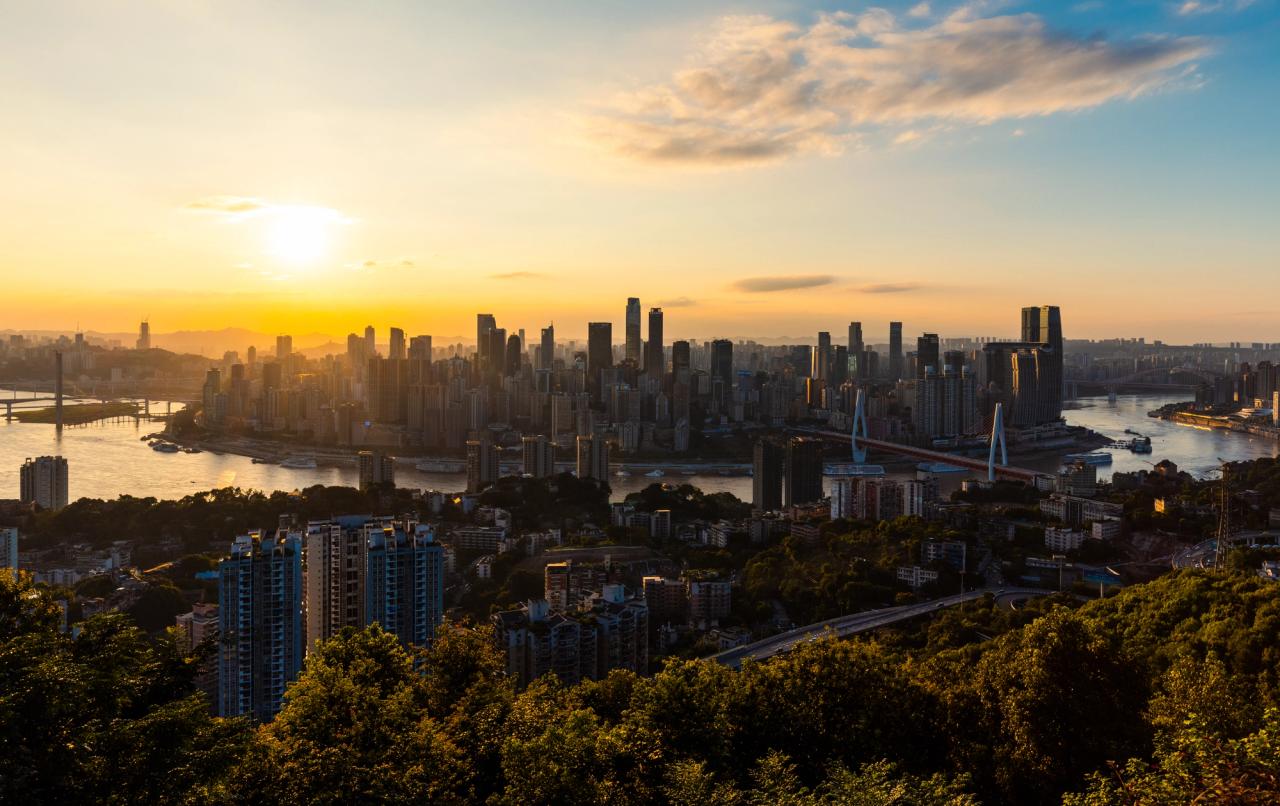
If you're planning your first trip to China, Chongqing and Chengdu are probably the two cities you keep seeing mentioned in the same breath — and you're stuck trying to pick one. Here's the honest answer: don't. You can actually do both, because getting between them is ridiculously easy. A train ticket costs under twenty bucks and takes a little over an hour. And the two cities give you completely different experiences, so going to both isn't redundant — it's the whole point.
I should tell you where I'm coming from: I'm from Chongqing, born and raised. I've spent my life walking these slopes, and I've been over to Chengdu plenty of times too. So this isn't a listicle scraped off a tour company's website. It's how a local actually sees these two cities.
The Short Answer
- Go to Chongqing if you want dramatic photos, cyberpunk night views, and a city that looks like nowhere else on earth.
- Go to Chengdu if you want pandas, teahouses, and a slow, easy place to soak up traditional Chinese culture.
- Go to both if you've got four or five days — and honestly, you should.
Chongqing vs Chengdu — What's the Actual Difference?
First, let's clear up something a lot of visitors get wrong: Chengdu and Chongqing are two separate cities. Chengdu is the capital of Sichuan province. Chongqing used to be a city within Sichuan, but it broke off to become a directly-governed municipality of its own — mostly for historical reasons I won't bore you with here.
Culturally, they're cut from the same cloth. Same Sichuan-rooted food, similar customs, similar accent. But the small differences are where it gets fun. Chengdu people speak softly and sweetly. Chongqing people are fiery — we talk loud and fast, and our personality matches our food.
Here's the one-line version: Chengdu is a city that lies flat and slow. Chongqing is a city that stands up and stares back at you.
Chongqing — The City You Photograph
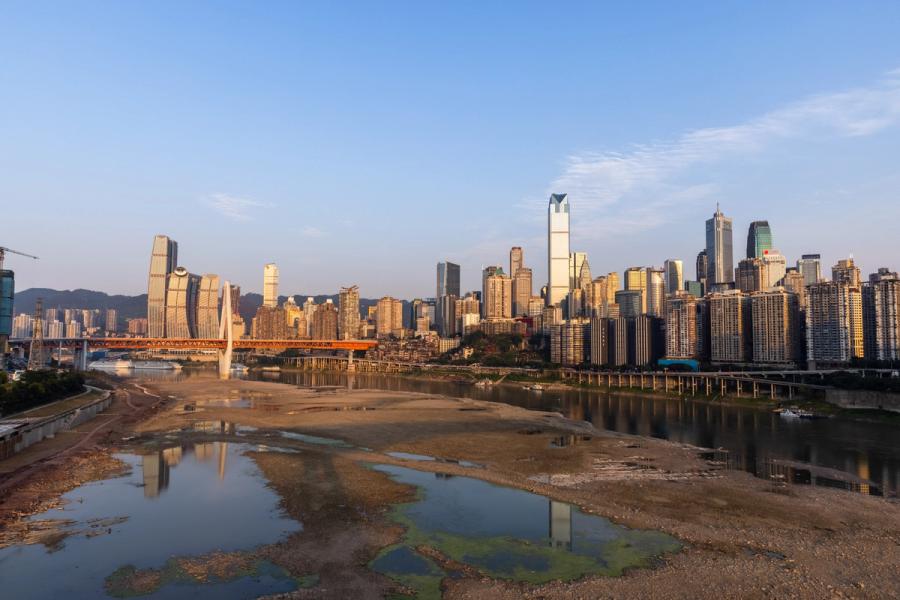
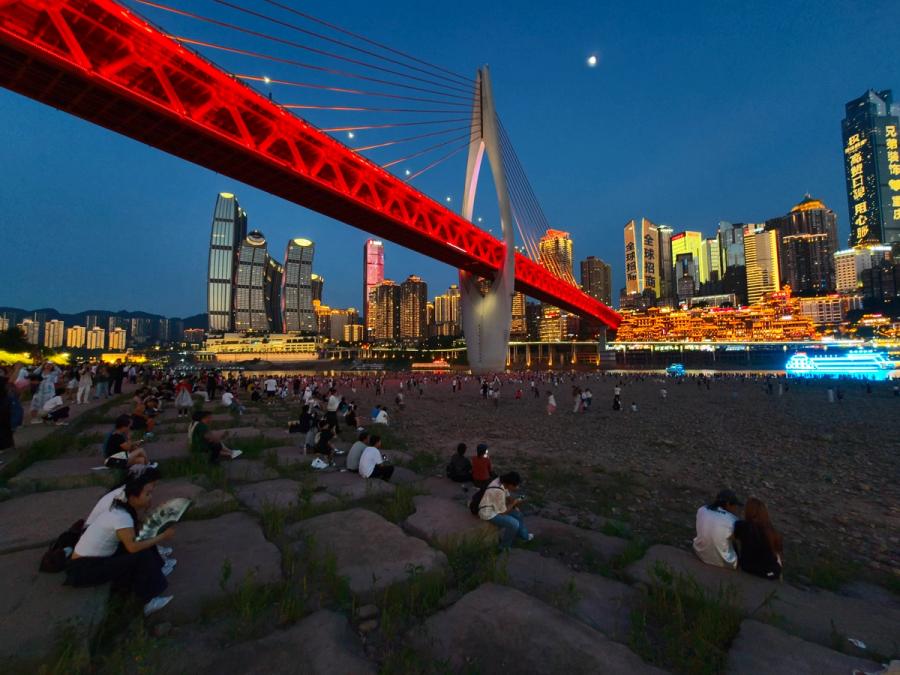
Over the last couple of years, Chongqing has blown up on social media, and it's not hard to see why. It looks like a cyberpunk movie that nobody had to build a set for. Drone shows over the river, neon night views, a maze-like tangle of streets that wraps around the mountains — that's the magic of this place.
Most cities get built on flat ground. Chongqing didn't have that option. It's built on the mountains, so everything stacks — high-rises up top, low-slung neighborhoods tucked below, all layered on top of each other. The deliberate, art-directed chaos that cyberpunk films spend millions trying to fake? Here it just happens naturally.
If you want jaw-dropping photos, spectacular night views, or that feeling of stepping into a sci-fi movie, this is your city.
A few spots worth shooting:
- Liziba — the famous monorail that runs straight through an apartment building.
- Nanbin Road — the best place to catch the drone shows over the river at night.
- And honestly, half the magic is just wandering. We call it City Walk — and yes, I know Shanghai has its own City Walk thing, but as a Chongqing native, I'll say ours is more interesting. You're climbing slopes, weaving between buildings on strange terrain, and every turn hands you a view you couldn't have planned. Every spot looks like nowhere else.
Chengdu — The City You Slow Down In
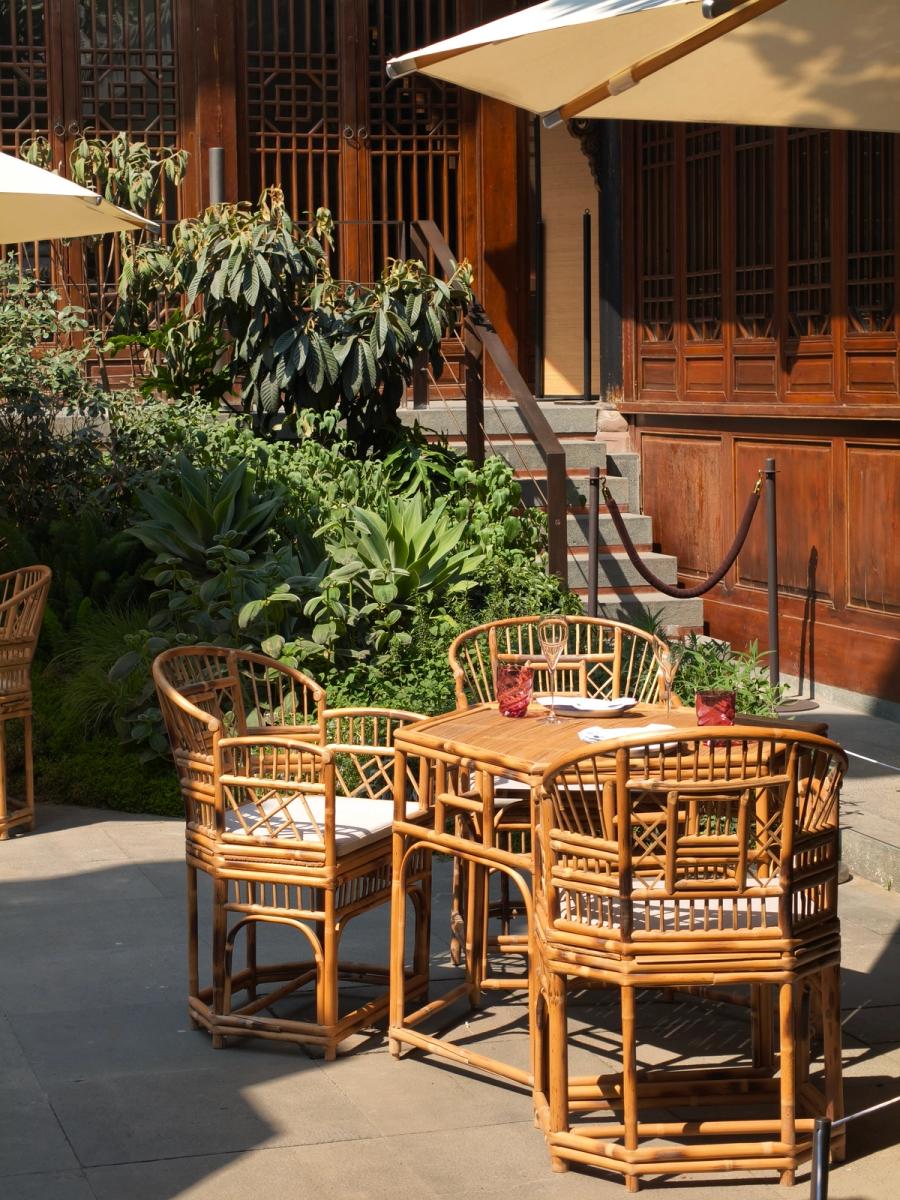
Chengdu is the opposite energy, and that's exactly why it's worth going. This is the home of slow culture. You sit down, you pour a cup of tea, and you let China unfold at its own pace.
The whole city is flat — it sits in a basin, spread out like a giant pancake. You can bike anywhere. Compare that to Chongqing, where you'd better be ready to climb.
What you do in Chengdu is different too. You go see the giant pandas. You wander the old towns where tradition and commerce blend together. You sit in People's Park next to some old guy, drink tea, play a little mahjong. That's the Chengdu way of relaxing.
I'll be honest — for someone from Chongqing, Chengdu actually feels novel. It's a genuinely different vibe. Which is the whole reason I keep telling you: these two cities feel different enough that you should just do both.
Food — Chongqing vs Chengdu, and the Spice Question
Both cities trace their food back to the same source: Sichuan cuisine. But Chongqing branched off into something slightly its own.
Chongqing's local style is called jianghu cai — "rivers-and-lakes cooking" — and it's all about throwing a mountain of chilies and Sichuan peppercorns into a wok and going for it. If you're worried about the heat, don't panic. There's plenty of non-spicy food too, and you can always tell the cook shao la (less spicy).
Chengdu is the more orthodox face of Sichuan food. And here's a thing people get wrong: Sichuan cuisine isn't all fire. A lot of the dishes are actually savory and mild — salty-fresh, not spicy. Heat is part of the deal, sure, but Chengdu doesn't hit you as hard as Chongqing does.
Bottom line on spice: if you genuinely can't take heat, Chengdu will treat you more gently. Chongqing will test you.
How to Get Between Them (It's Easier Than You Think)
This is the part that makes "do both" actually work.
Download an app called 12306 — it's China's official railway booking app, it has an English version, and foreign travelers can buy tickets on it. If the app trips you up, just go to the station and buy in person; the staff will help you. Only tip: go a little early.
Trains between Chongqing and Chengdu run constantly — roughly one an hour, sometimes every half hour, from morning until around 10pm. Basically, you can show up at the station almost any time and grab a ticket either direction. The ride is about an hour, or an hour and a half on the slower trains — but even the "slow" ones are fast.
If you booked online, you only need to get to the station about 20 minutes ahead, since boarding takes maybe ten. That's why I keep saying these two belong on the same trip — the commute barely costs you any time. Leave at 9am, and you can be in Chengdu by 10:30, ready to do something completely new. Works the other way around too.
How Many Days, and a Simple Plan
If you're doing both, I'd budget two to three days per city — more if you want to explore the surrounding areas. And I'll admit it: the regions around both cities have a lot going on. You can find genuinely ancient temples and stone carvings out there. If you've got the time and the legs for it, go look. (Maybe I'll write a guide to the surrounding areas down the line.)
A rough five-day version looks like:
- Days 1–2: Chongqing — night views, Liziba, City Walk, hotpot.
- Day 3: Morning train to Chengdu.
- Days 3–5: Chengdu — pandas, teahouses, old towns.
So… Chongqing or Chengdu? My Honest Take
If you're going to force me to pick — ha — well, I'm from Chongqing, so you can guess where I lean. The thing people tell me most often is that Chongqing is just unlike anywhere else. Most cities get to choose flat ground. Chongqing, in a sense, had no choice but to climb the mountains, and that constraint turned it into something one of a kind.
But I genuinely love Chengdu too. There's something about the soft, sweet way people there talk — it reminds me of how people joke about Kyoto folks in Japan: all that gentleness, with a knowing little smile underneath. That's the vibe.
Pick Chongqing for photos, cyberpunk, and urban exploring. Pick Chengdu for pandas, tea, and slowing down into tradition. But if you can swing it — go to both. That's the trip I'd want you to have.
FAQ
How far is Chongqing from Chengdu?
About 300 km — a little over an hour on the high-speed train.
How many days do you need for both?
Around five days is a comfortable amount.
Which is spicier, Chongqing or Chengdu?
Chongqing, no contest.
Can you see pandas in Chongqing?
Yes — but Chengdu does it better.
If I really have to choose one, which?
Chongqing if you want photos, cyberpunk, and city exploration. Chengdu if you want pandas, tea, and a slower dive into traditional culture.