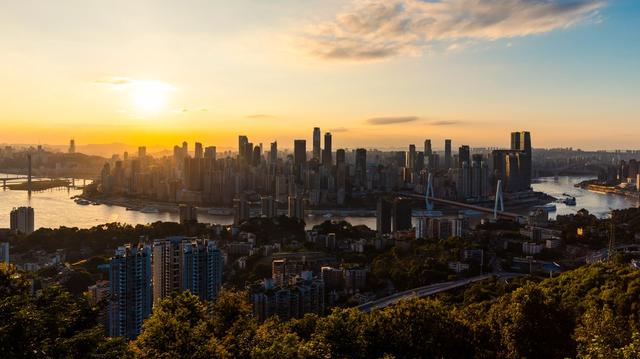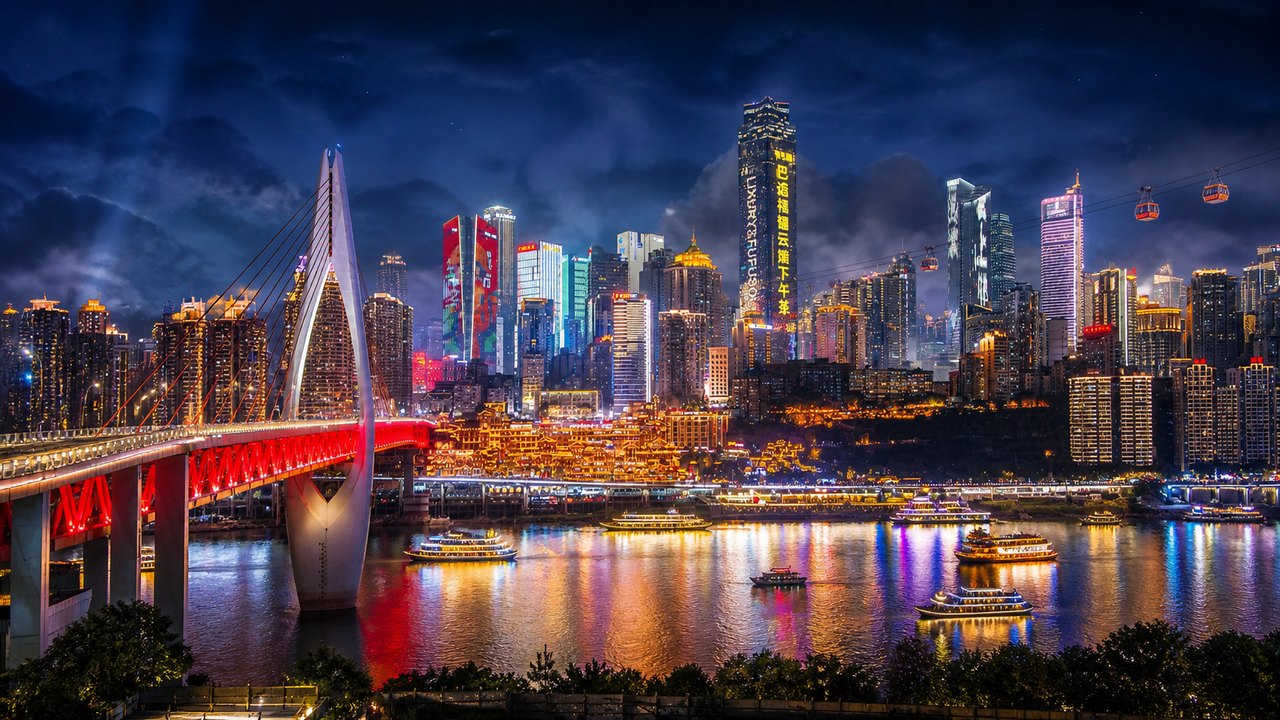
If you're planning your first trip to China, you've probably built a shortlist that looks something like this: Beijing for the Great Wall and the Forbidden City, Shanghai for the skyline, maybe Guangzhou or Xi'an. These are the cities that have welcomed foreign visitors since the early 2000s, and for good reason. But there's a name that keeps showing up in your social media feed, usually attached to footage of a monorail driving straight through an apartment building or a glowing, stacked cityscape that looks like it was lifted out of a sci-fi film. That city is Chongqing.
So is Chongqing worth visiting, or is it just a place that photographs well? Having spent real time here, my honest answer is that it depends on what kind of traveler you are — but for a lot of people, it's one of the most rewarding stops in the whole country. Here's a straight, no-hype look at what makes Chongqing different, who it's for, and what you should know before you go.
What makes Chongqing different from other Chinese cities
Almost every Chinese city will tell you about its long history, and Chongqing has plenty of it — it served as China's wartime capital, twice. But honestly, if history is the hook, every city in China can talk for hours. That's not what makes Chongqing special.
What makes Chongqing genuinely unlike anywhere else is its geography. The city is built into the mountains, which means it grows vertically instead of spreading out flat the way Beijing or Chengdu do. This one fact changes everything about how the city looks and feels. Streets stack on top of streets. Roads cross over each other at different heights. A building can have several "ground floors" — and that's completely normal here. The top floor of a tower might open directly onto a hillside, and when you walk out, you're somehow back on street level again.
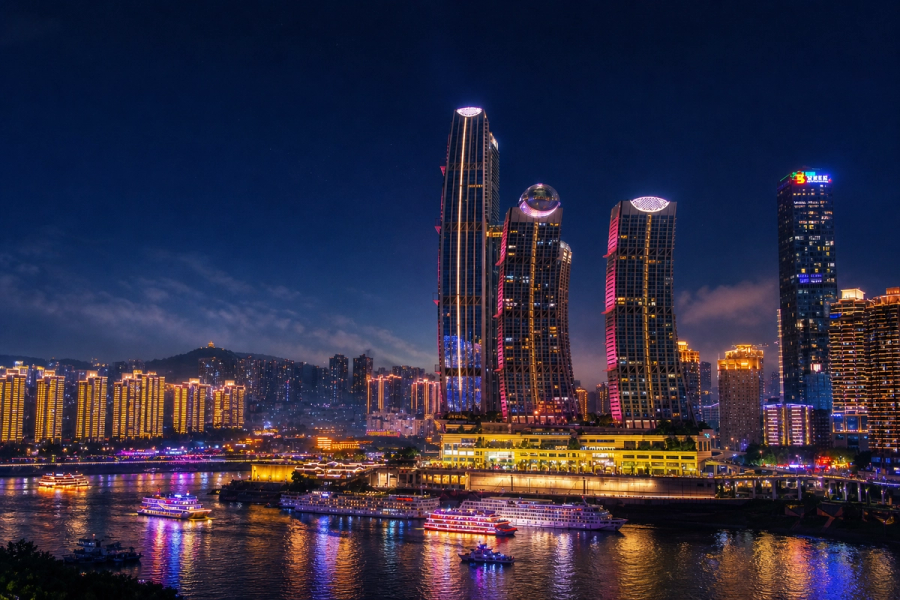
This is exactly why Chongqing went viral. That 3D, layered, almost cyberpunk quality isn't a design gimmick — it's the practical result of fitting a megacity of 30 million people onto steep mountain terrain. The visual impact is real, and it's the kind of thing that's genuinely hard to find anywhere else in the world.
Chongqing vs Hong Kong: similar look, completely different trip
People who've seen photos of both sometimes assume Chongqing and Hong Kong are interchangeable. They do look alike in some ways — both are built on hills, both mix old and new buildings stacked tightly together. But they are not substitutes for each other, and choosing between them isn't about picking the "better version."
Hong Kong is an international city. Its identity is built on being a global crossroads — world cuisine, international culture, a place where everything from everywhere comes together. Chongqing is the opposite kind of special. It's a heartland city, the home of authentic Sichuan cuisine, where the food and culture come from the place itself rather than from the world arriving. In Hong Kong you eat the world; in Chongqing you eat Chongqing. Two cities that look similar on camera will give you two completely different experiences on the ground.
A different, un-stereotyped side of China
This is the real reason I think Chongqing is worth the trip, especially for a first-timer. Beijing, Shanghai, and Guangzhou have been the main gateways for foreign tourists for over two decades, and each offers a distinct regional culture worth experiencing. But Chongqing offers something those cities can't: a version of China that hasn't been smoothed over for visitors.
Chongqing is a relatively new destination on the international radar. It may not be quite as convenient as Beijing or Shanghai — fewer people speak English, and some of the city takes effort to reach. But that's exactly the upside. Because the city hasn't reshaped itself to cater to tourists, what you experience is the real thing: authentic Bayu culture, one of China's essential cultural roots, served without a filter. If you want a China that doesn't match the postcard stereotype, this is where you find it.
The food: it's not just hotpot (and the hotpot isn't as scary as you think)
Chongqing's food culture is defined by spice, and two dishes sit at the top: hotpot and xiaomian (Chongqing noodles). Most travelers have heard of the hotpot. Fewer know about xiaomian, but it's every bit as much a pillar of local eating, and absolutely worth trying.
Now, about that fear of the spice. Most people imagine Chongqing hotpot as unbearably hot. Here's the honest truth: if you find the right place and communicate your spice level in advance, it's often much milder than its reputation — sometimes about the same as the Chinese food back in your home country, occasionally even less. The key is to speak up before you order. Pull out your translation app and say one of these:
- "No spicy at all"
- "Mild spicy"
- "Medium spicy"
- "Extra spicy" (only if you really can handle heat)
If you skip this step and you can't take spice, you may genuinely struggle — so don't be shy about asking.
What to actually see
I'll give you one tip that most guides get wrong. Everyone tells you to go to Hongya Cave (the famous glowing, stacked riverside complex). What they don't tell you is the best way to see it. If you want to take in the full view of Hongya Cave — the whole illuminated structure rising up the hillside — don't stand right next to it. Instead, navigate to the Chongqing Grand Theatre and look back at it from across the river. That's the angle that gives you the complete picture, and it's the shot you actually came for.
Getting around: be ready to climb
Chongqing has excellent public transport. The metro and bus networks are extensive, taxis are cheap, and you can get almost anywhere without much trouble. Taxis start at around 1.5 USD and run roughly 0.15 USD per kilometer, and drivers accept cash, WeChat Pay, or Alipay.
That said, if you want to dig into the real character of the city, be prepared to climb. Chongqing is built on slopes and stairs, and exploring it on foot is a genuine workout. Hikers and active travelers often love this — it's part of the adventure. But if you'd rather not walk too much, don't worry: the metro and buses have you covered, so you can experience the city comfortably either way.
A quick note on payments: China is largely cashless, so digital payment matters. As of mid-2026, PayPal users can now pay through WeChat Pay's QR network in China — but this rolled out to U.S.-based PayPal users first, with other markets following later. Before you travel, check whether the feature is live in your country, and set up WeChat Pay or Alipay (both let you link a foreign card) as well. Sorting this out before you fly will save you a lot of friction.
Weather: respect the summer heat
Chongqing summers are seriously hot — sometimes extreme. If you're visiting in the warm months, take sun protection and heat management seriously. When temperatures spike, it's genuinely not a good idea to overdo outdoor activity, because all that climbing and stair-walking sharply raises your risk of heat exhaustion. Plan demanding sightseeing for cooler parts of the day, and don't be afraid to duck indoors when it peaks.
Language: bring an app, but don't worry
Fewer locals speak English here than in Beijing, Shanghai, or Guangzhou, so bring a translation app — you'll use it. But here's the reassuring part: people in Chongqing are warm and genuinely helpful. Don't hesitate to approach someone. Even across a language barrier, you'll find people going out of their way to help you, and that openness is a real part of the city's charm.
How long to stay — and why you should add Chengdu
For a first-timer fitting Chongqing into a larger China trip, the smartest move is to pair it with Chengdu. The two cities are only about one hour apart by high-speed train, with tickets running roughly 20–30 USD. That kind of convenience is almost unique to this pairing, and the two cities are culturally quite distinct, so you're not seeing the same thing twice. Chengdu has its own famous, relaxed character (and yes, the pandas), and experiencing both back to back gives you a fuller, richer picture of southwestern China than either one alone.
So, is Chongqing worth visiting?
If you want a polished, English-friendly, easy-mode introduction to China, Beijing and Shanghai will serve you well. But if you want something different — a vertical, mountain-built megacity that looks like nowhere else on earth, authentic Sichuan food, real Bayu culture that hasn't been repackaged for tourists, and a side of China that breaks the stereotype — then Chongqing is absolutely worth the trip. Come ready to climb, bring a translation app, ask for your spice level, and give yourself a day or two to get pleasantly lost. It's chaotic, it's wild, and it has a personality you won't forget.